
آخر

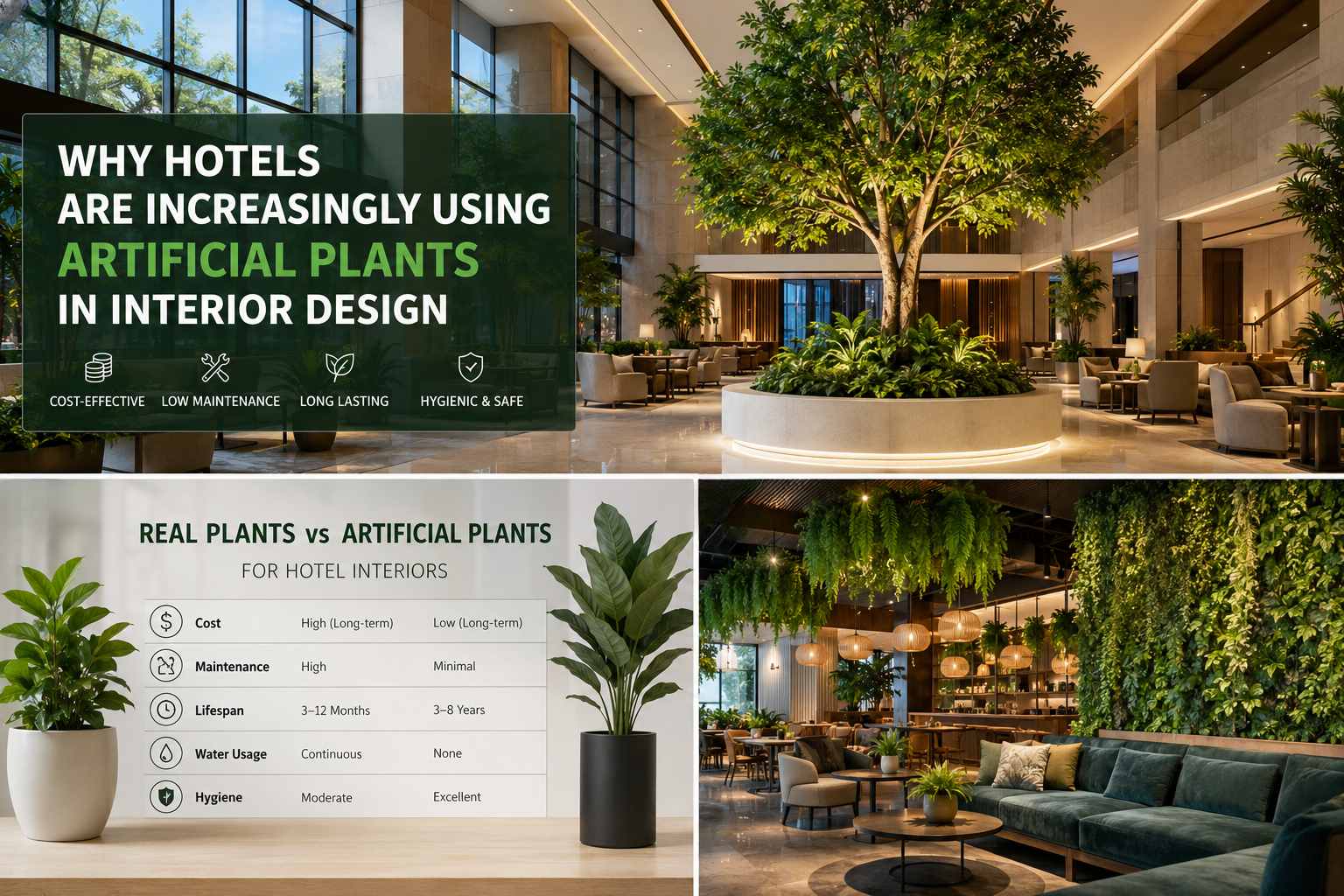
Why Hotels Are Increasingly Using Artificial Plants in Interior Design

Why Hotels Are Increasingly Using Artificial Plants in Interior Design

May 29, 2026
أفضل شراء قمت به هذا الشتاء! اللون والحياكة رائعان، وهو مريح للغاية! سافرت من نيويورك إلى ميامي دون أن أخلعه لحظة. في غاية الروعة!
مابو - الرئيس التنفيذي لشركة رايزينغ بامبو

In modern hospitality design, visual atmosphere has become just as important as service quality and room comfort. Greenery is no longer just decoration—it plays a key role in shaping guest emotion, brand identity, and overall spatial experience.
 

However, in recent years, more and more hotels have been shifting from real plants to high-quality artificial plants. This is not simply a cost-cutting decision, but a long-term operational and design strategy driven by efficiency, consistency, and flexibility.


1. Cost Comparison: Real Plants vs Artificial Plants


One of the most important factors influencing hotel decisions is long-term cost efficiency.


Below is a typical industry-based comparison for commercial indoor landscaping (hotel lobby / public area scale):


Cost Factor Natural Plants Artificial Plants
Initial Purchase Cost Low–Medium Medium–High
Monthly Maintenance $50–$500 per area (gardening, watering, fertilizing) $0–$20 (basic cleaning)
Replacement Cycle 3–12 months (depending on conditions) 3–8 years
Pest Control Cost Required regularly None
Water Consumption Continuous None


👉 In most hotel environments, artificial plants become more cost-effective after approximately 12–24 months of operation, especially in large-scale installations.


2. Maintenance Workload Comparison


Hotels operate 24/7, and reducing maintenance workload is a major operational goal.


Maintenance Task Natural Plants Artificial Plants
Watering 2–5 times per week Not required
Pruning Monthly Not required
Fertilization 1–2 times per month Not required
Pest control Regular treatment Not required

Staff labor hours

(monthly estimate per lobby area)

10–25 hours 1–3 hours


👉 Artificial plants can reduce maintenance labor by up to 80–90%, freeing staff for guest service instead of plant care.


3. Environmental Suitability in Hotel Spaces


Hotels contain many areas where natural plants struggle to survive:


Hotel Area Type Natural Plants Performance Artificial Plants Suitability
Sunlit lobby Good Excellent
Indoor corridors Poor Excellent
Windowless bathrooms Not viable Excellent
Underground restaurants Poor Excellent
Conference halls Moderate Excellent


👉 Artificial plants allow hotels to design greenery in 100% of interior spaces, regardless of lighting or humidity conditions.


4. Lifespan and Durability


Durability is a key advantage in commercial environments with high guest traffic.


Factor Natural Plants High-Quality Artificial Plants
Average lifespan 3–12 months (indoor commercial use) 3–5+ years
Damage resistance Low High
Appearance stability Declines over time Consistent
Climate sensitivity High None


👉 In hospitality environments, artificial plants offer 5–10x longer usable lifespan compared to natural indoor plants.


5. Guest Experience and Visual Consistency


Hotels rely heavily on visual branding consistency across marketing platforms such as booking websites and social media.


Experience Factor Natural Plants Artificial Plants
Visual consistency Variable Stable year-round
Photo appearance Seasonal changes Always optimal
Branding control Limited Fully controllable
Design predictability Low High


👉 This is especially important for hotels that depend on platforms like Booking.com, Airbnb, and Instagram marketing.


6. Hygiene and Safety Considerations


Modern hospitality standards prioritize cleanliness and guest health.


Hygiene Factor Natural Plants Artificial Plants
Soil presence Yes No
Mold risk Moderate None
Insect attraction Possible None
Allergy risk Possible (pollen) Minimal


👉 Artificial plants provide a more controlled and hygienic indoor environment, especially in high-end hotels and healthcare-related hospitality spaces.


7. Why This Trend Is Growing in Hotels Globally


Based on hospitality design reports and procurement trends, hotels are increasingly adopting artificial greenery due to:


  • Rising labor costs in facility maintenance
  • Expansion of multi-property hotel chains requiring standardization
  • Demand for Instagram-friendly interiors
  • Increased focus on hygiene and guest safety
  • Advancements in realistic artificial plant manufacturing


Modern artificial plants now use:


  • UV-resistant materials
  • Natural color gradient painting techniques
  • Real-touch leaf technology
  • Reinforced internal structures for large trees


These improvements make them visually indistinguishable from real plants in most indoor environments.


The shift toward artificial plants in hotel interior design is not simply a cost-cutting decision—it is a comprehensive strategy combining aesthetics, operational efficiency, and long-term stability.


From luxury hotels to business chains, artificial greenery offers a scalable and reliable solution that supports modern hospitality demands.


As design expectations continue to rise, artificial plants are becoming an essential element in creating consistent, beautiful, and maintenance-free hotel environments.

 
أحدث تدوينة

ترك رسالة

ترك رسالة
إذا كنت مهتمًا بمنتجاتنا وترغب في معرفة المزيد من التفاصيل، فيرجى ترك رسالة هنا، وسنرد عليك في أقرب وقت ممكن.

بيت

منتجات

WhatsApp

اتصال