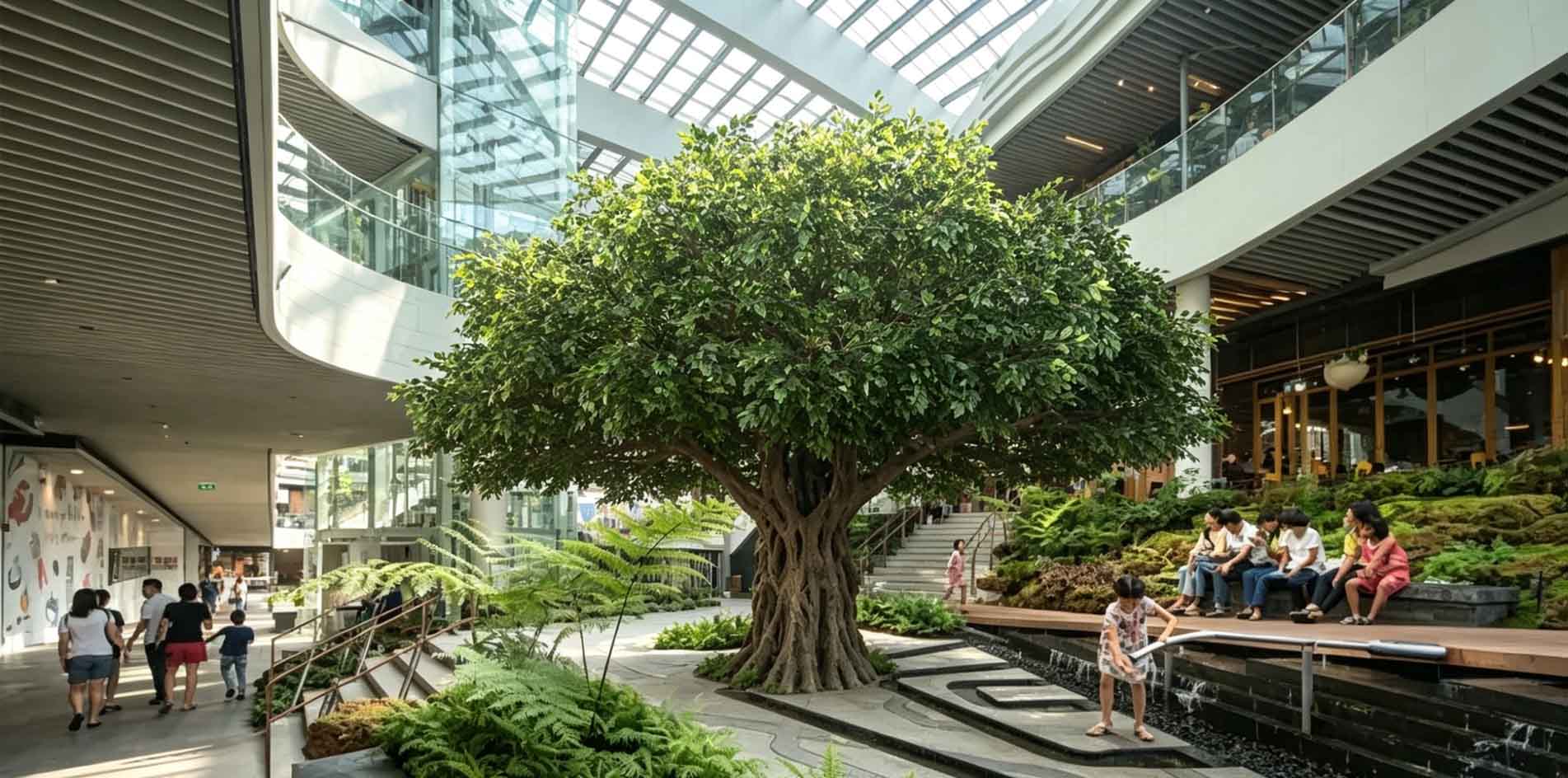
Choosing the right height for an artificial palm tree involves more than measuring the available floor space. Ceiling height, canopy width, furniture placement, viewing distance, and the intended use of the area all affect how a palm tree looks in its surroundings. A tree that works well in a living room may appear too small in a hotel lobby, while an oversized palm can make a compact room feel crowded.
Artificial palm trees are available in a wide range of sizes, from compact decorative plants to large statement trees designed for commercial interiors. Understanding these differences helps buyers select suitable products for individual spaces, coordinate multiple trees within a project, and make more informed purchasing decisions.
This guide explains how to choose the right artificial palm tree height, what measurements to consider, and how to compare different sizes for residential, hospitality, retail, and other commercial applications.
1. Why Does Artificial Palm Tree Height Matter?
The height of an artificial palm tree influences the overall balance of a room. It affects how the tree relates to the ceiling, furniture, surrounding decorations, and other visual elements.
Selecting an appropriate height also helps avoid practical problems during installation and daily use.
Creating the Right Visual Proportion
A palm tree should fit naturally into its surroundings. In a small room, a compact or medium-height tree may provide enough greenery without overwhelming the furniture. In a large open space, a taller palm can help fill an empty corner or create a focal point.
For example, a palm tree placed beside a sofa should generally complement the height of the furniture rather than dominate the entire seating area. In a hotel lobby with a high ceiling, a taller artificial palm tree may be more suitable because a short plant can appear insignificant against the surrounding architecture.
The goal is not always to choose the tallest available product. It is to select a size that maintains a comfortable visual relationship with the space.
Making Better Use of Vertical Space
Vertical space is particularly important in rooms with high ceilings, open staircases, large windows, or double-height entrances.
A taller artificial palm tree can introduce greenery at different levels and make an otherwise empty area feel more complete. However, the canopy also needs sufficient clearance from lighting fixtures, signs, ceiling decorations, and ventilation equipment.
Measuring the full height of the intended installation area before selecting a product can help prevent these issues.
Supporting Practical Installation
Height affects transportation, assembly, placement, and maintenance access. Large artificial palm trees may have detachable trunks or branches to make packing and installation easier.
For commercial projects, buyers should consider not only the final assembled height but also the dimensions of individual components, access through doorways, elevator capacity, and available installation space.
2. Common Artificial Palm Tree Height Ranges
Artificial palm trees do not have one standard height classification. Product dimensions vary by palm species, canopy design, trunk construction, and manufacturer. Nevertheless, the following ranges can serve as a starting point when comparing products.
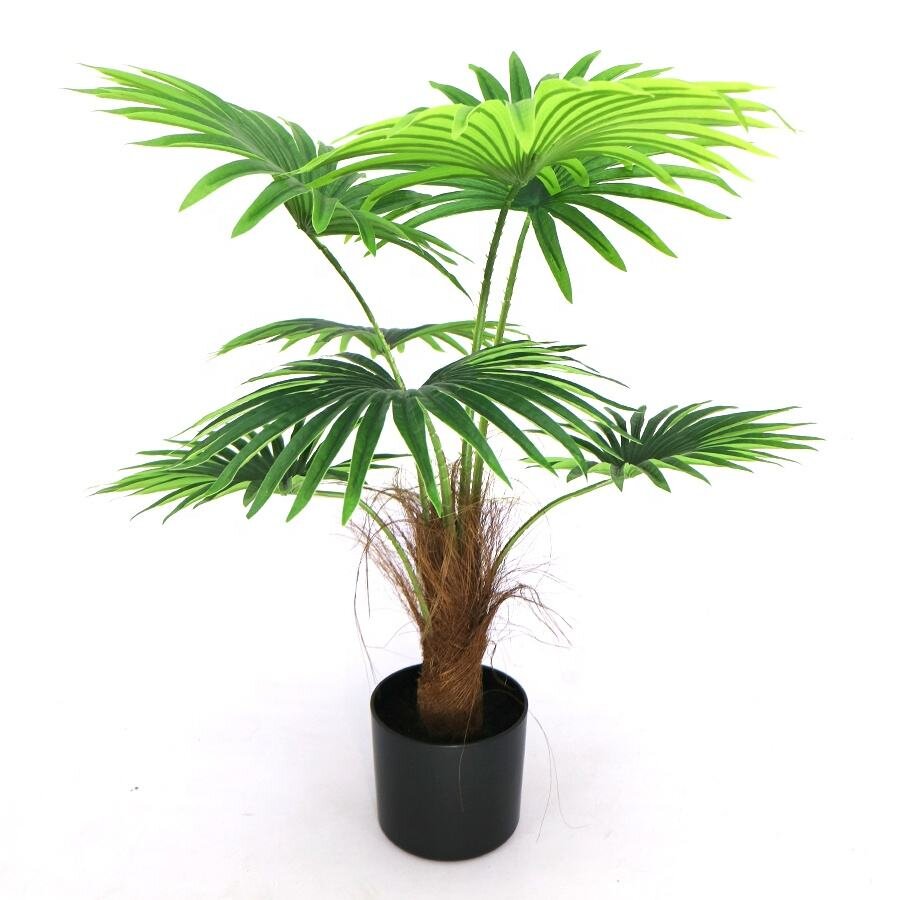
Short Artificial Palm Trees: Approximately 60–120 cm
Short artificial palm trees are suitable for compact areas where floor space is limited or where greenery is intended to complement existing decorations.
Common applications include:
- Apartment corners and small living rooms
- Office desks, reception counters, and side tables
- Shelves, display cabinets, and decorative stands
- Small retail displays and boutique interiors
- Bathrooms and other compact indoor spaces, where the environment is suitable for the product
A short palm can also work well in groups. Combining plants of different heights can create a layered display without requiring a large individual tree.
When choosing a shorter artificial palm tree, pay attention to its overall proportions. A narrow canopy may look understated, while a fuller canopy can create a more noticeable decorative effect even when the plant is relatively low.
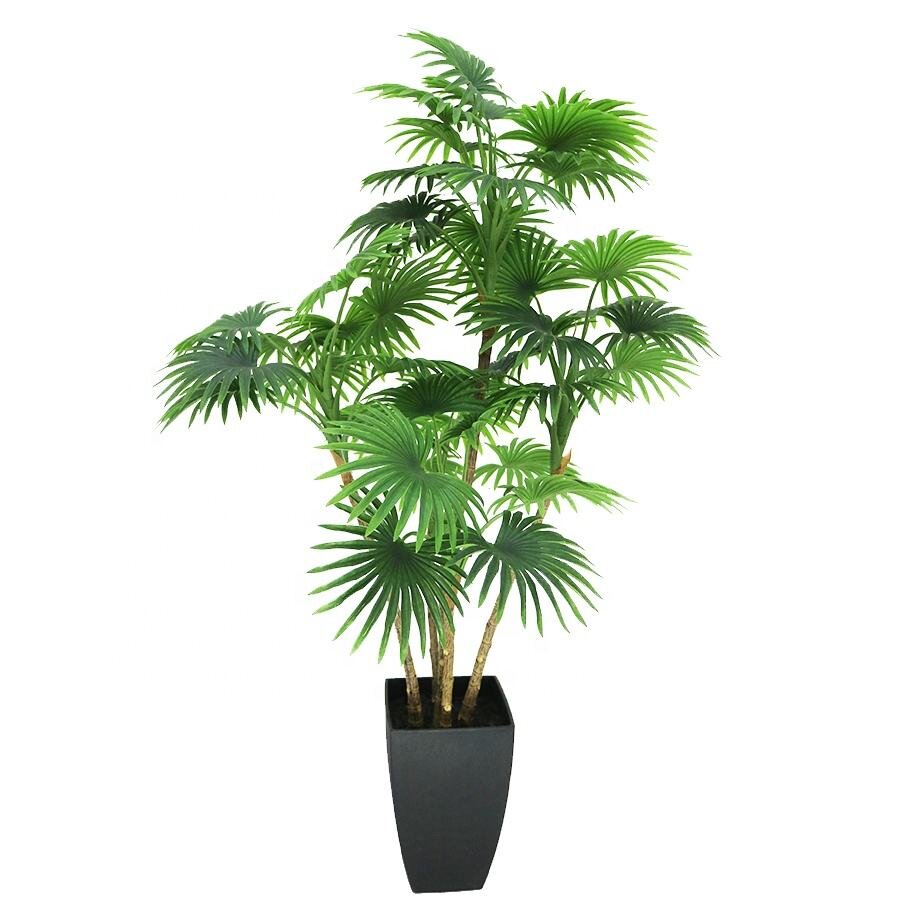
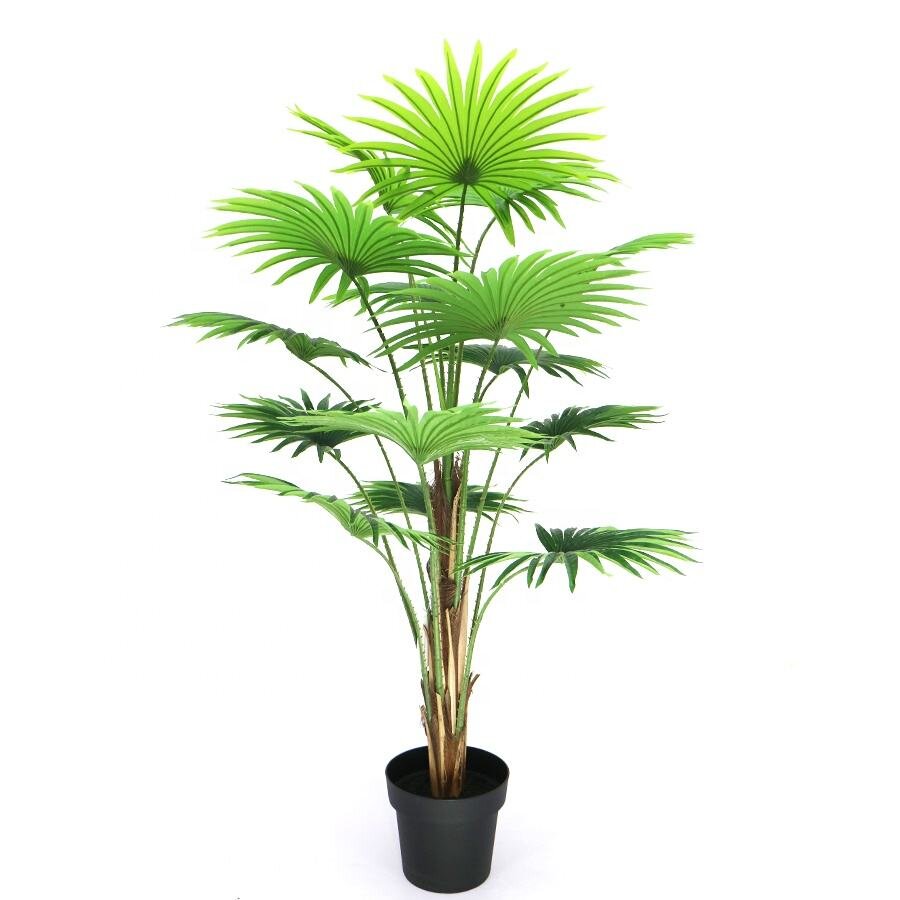
Medium Artificial Palm Trees: Approximately 120–200 cm
Medium-height artificial palm trees are versatile options for residential interiors and many commercial settings. They provide noticeable vertical greenery without necessarily requiring a high ceiling.
Typical applications include:
- Living rooms and bedrooms
- Office reception areas
- Hotel guest rooms and lounge areas
- Restaurants and cafés
- Retail stores and showroom displays
- Waiting rooms and meeting areas
A palm measuring around 150–180 cm may work beside a sofa, near a window, or in an open corner, depending on the ceiling height and surrounding furniture.
For commercial buyers, this height range can be useful when selecting products for multiple locations with similar interior dimensions. However, the canopy width and overall appearance should also be reviewed before ordering in bulk.
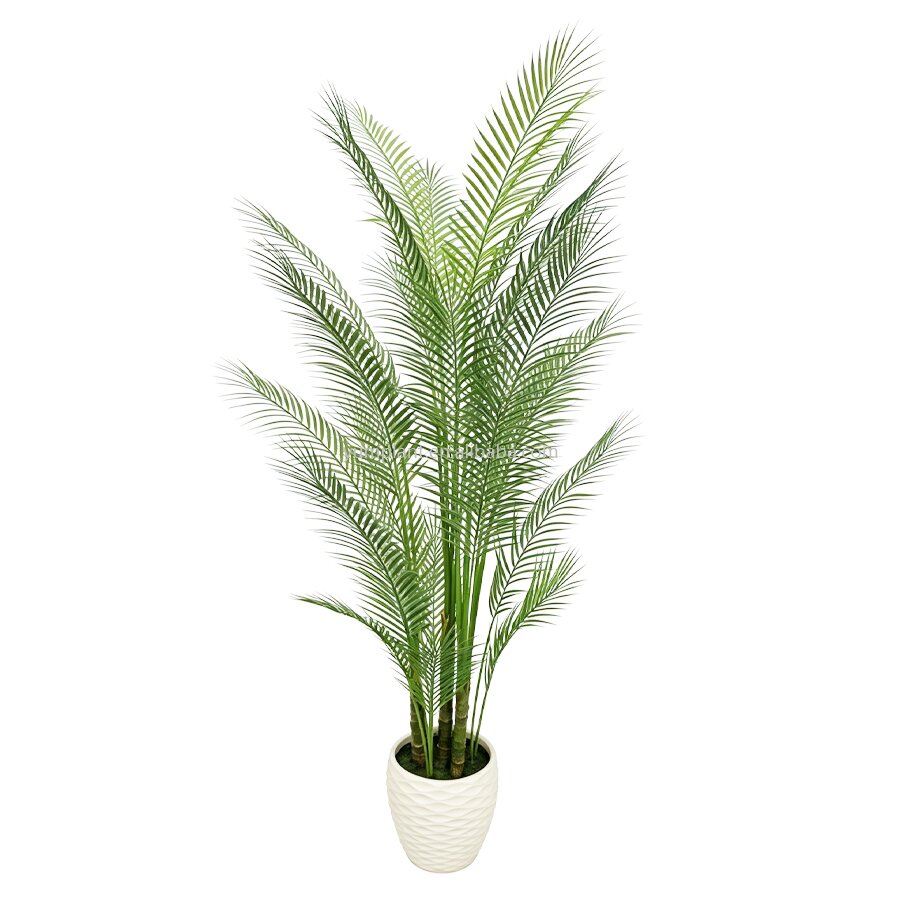
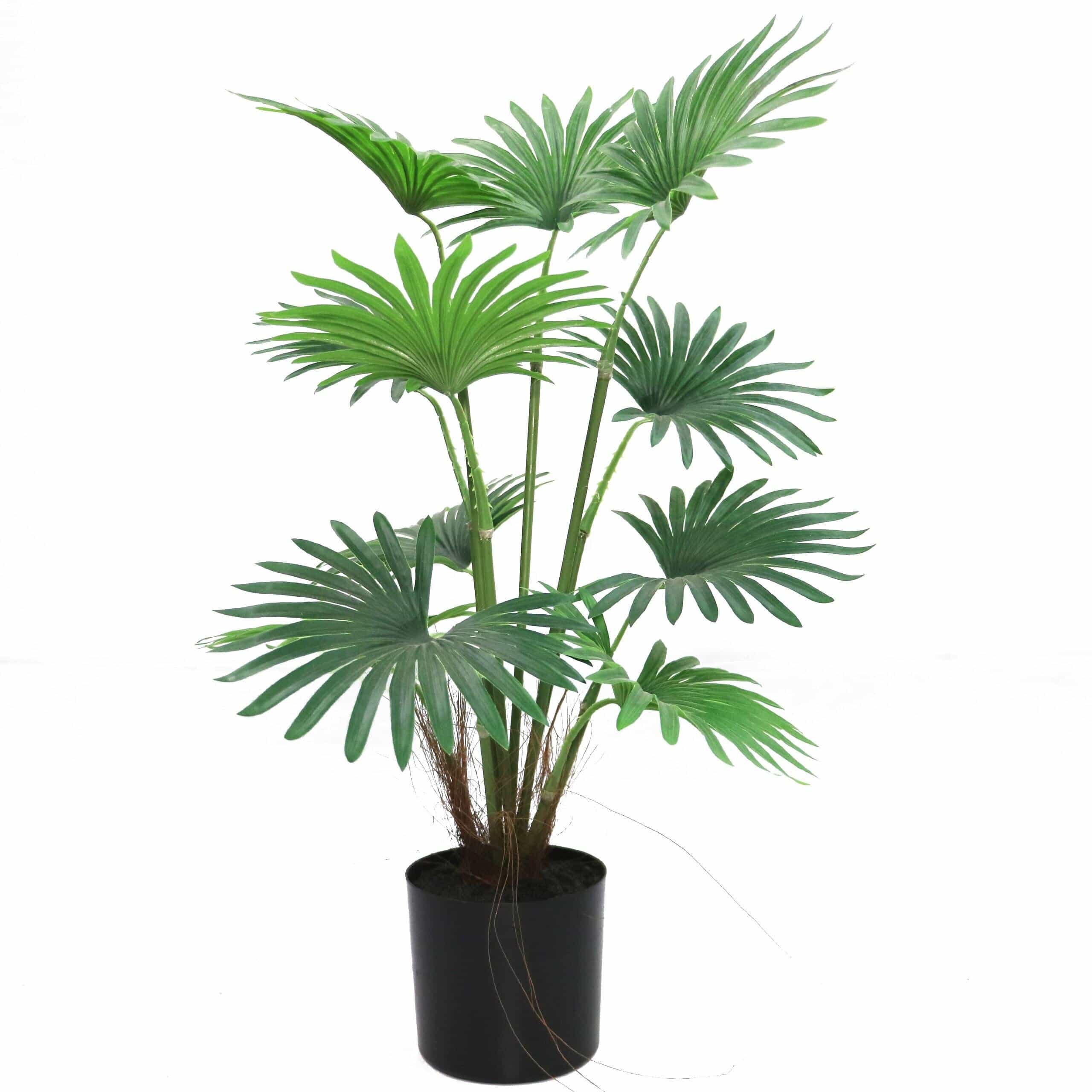
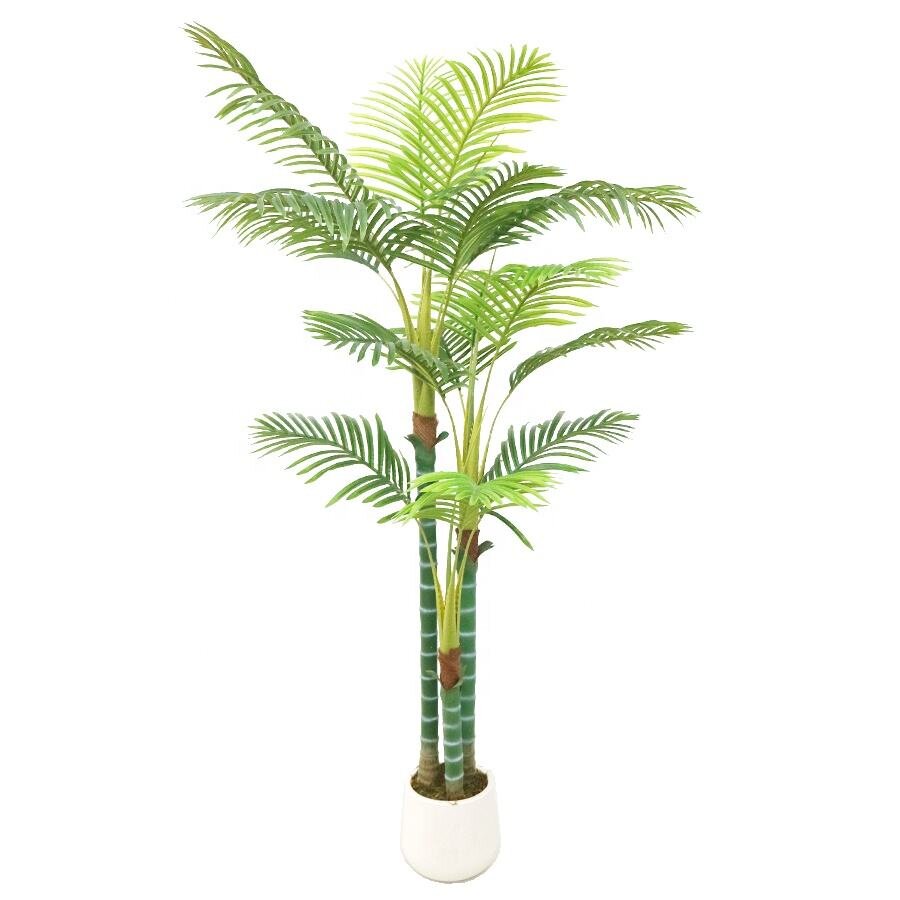
Tall Artificial Palm Trees: Approximately 200–300 cm
Tall artificial palm trees are often used where greenery needs to be visible from a distance or where a room has generous vertical space.
Suitable applications may include:
- Hotel lobbies and hospitality lounges
- Shopping centers and retail entrances
- Restaurant interiors with high ceilings
- Office reception halls
- Showrooms and exhibition areas
- Large residential living spaces
A taller artificial palm tree can create a stronger visual presence, but it also requires more careful planning. The total height, including the planter if supplied, must fit the installation area. The canopy may extend outward considerably, so measuring only the trunk height is not sufficient.
For trees above approximately 250 cm, buyers should also confirm packaging dimensions, assembly requirements, and whether the product can be moved through the building's access routes.
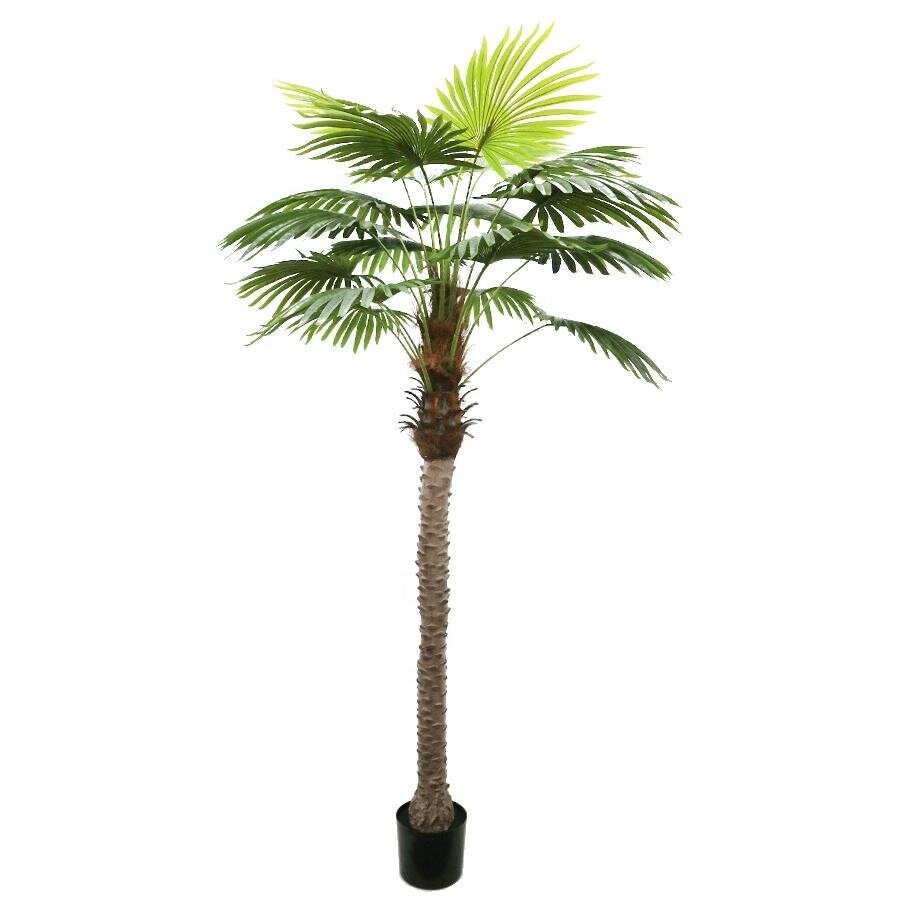
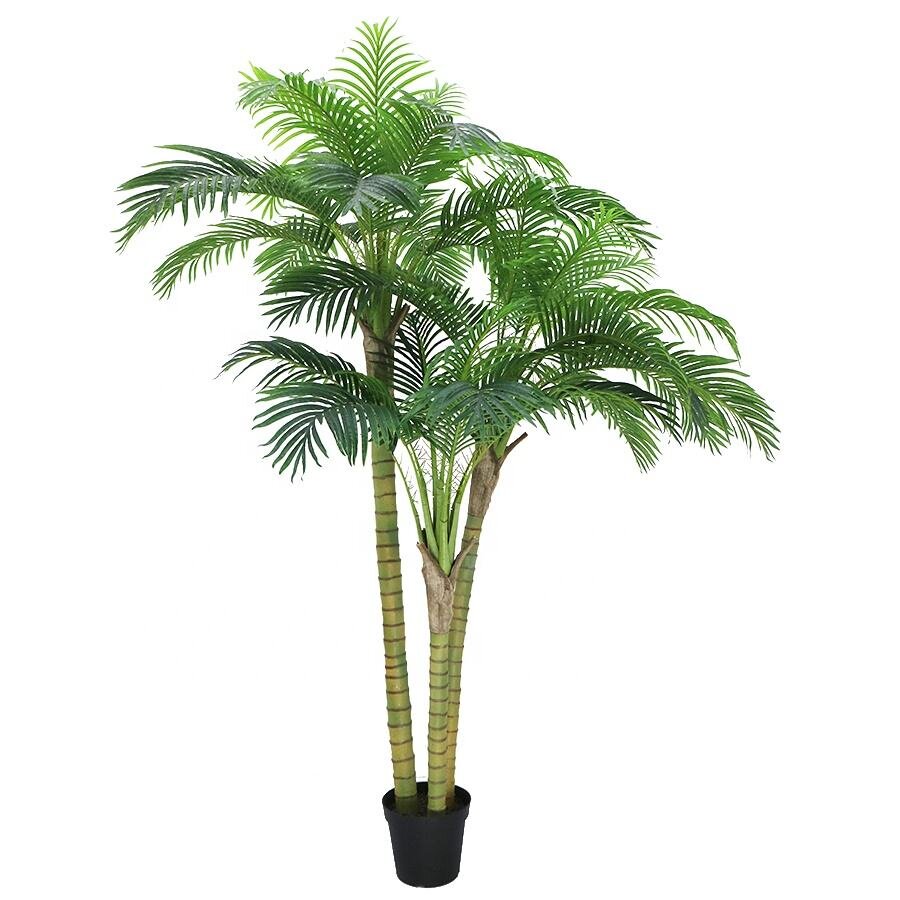
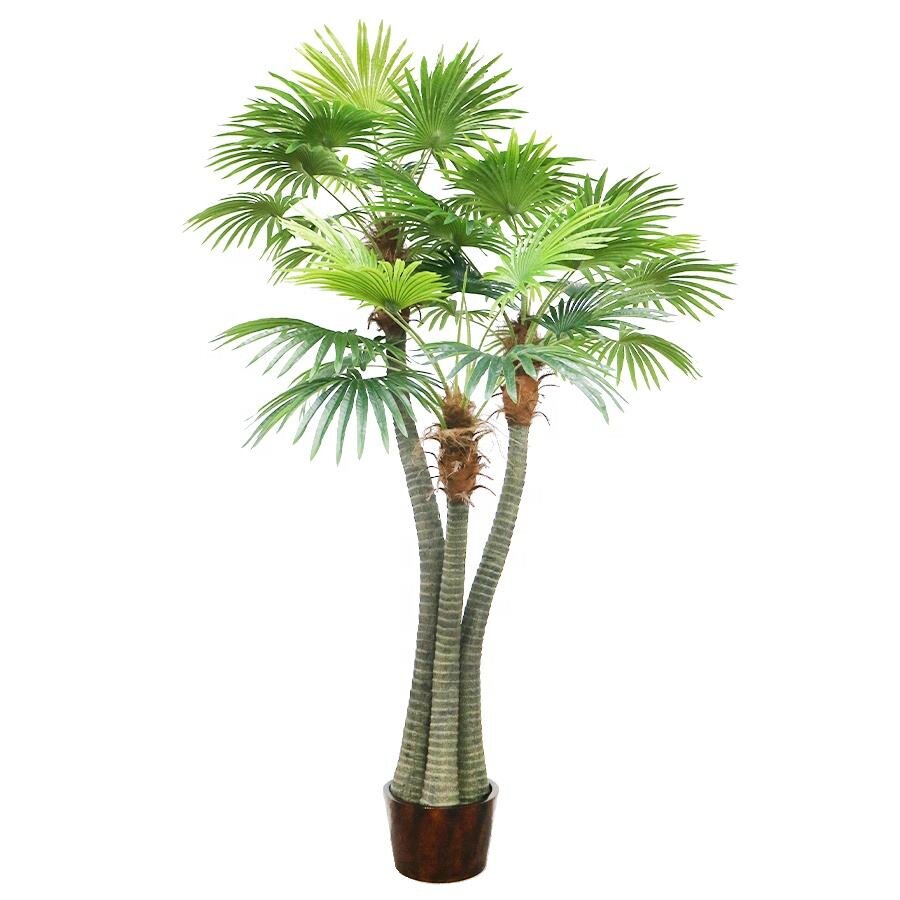
Extra-Large Artificial Palm Trees: Above 300 cm
Artificial palm trees above 300 cm are generally intended for large interiors, specialized displays, or commercial projects with substantial vertical clearance.
Potential applications include atriums, resort interiors, large hotel entrances, shopping malls, and themed commercial environments.
These products may require customized dimensions, reinforced internal structures, detachable components, or specialized installation arrangements. Their suitability depends on the design, available space, safety requirements, and intended placement.
For projects involving several large palms, it is helpful to prepare a layout with ceiling heights, tree positions, canopy dimensions, and access routes before confirming specifications.
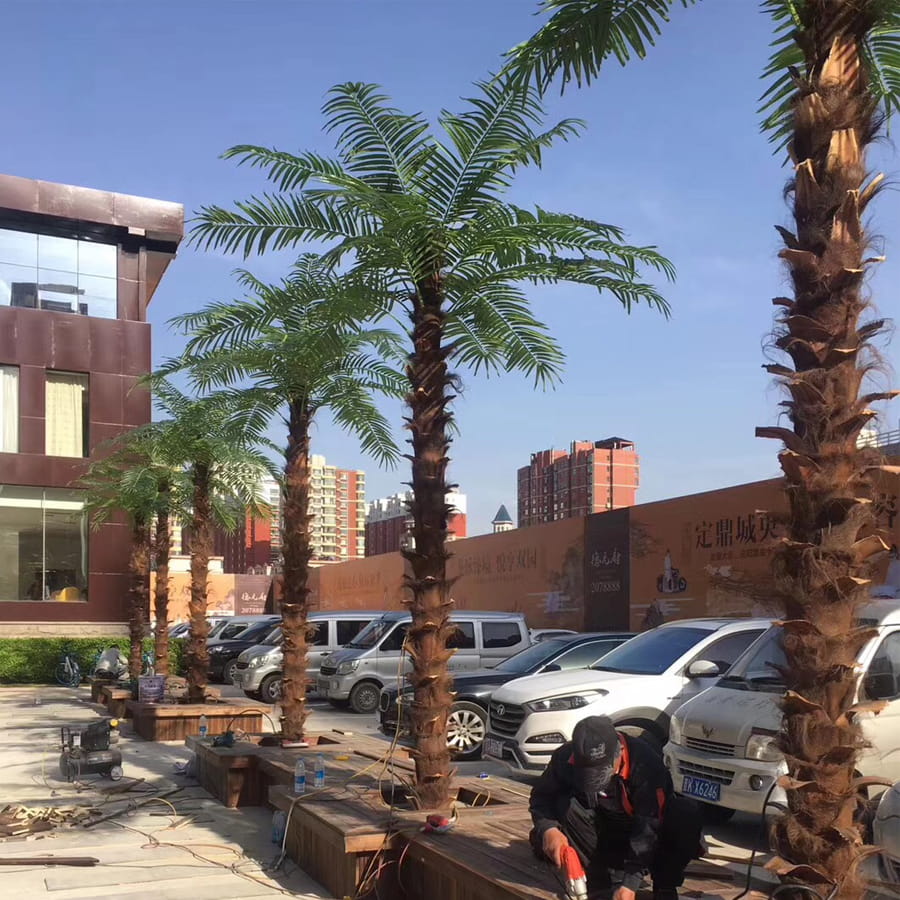
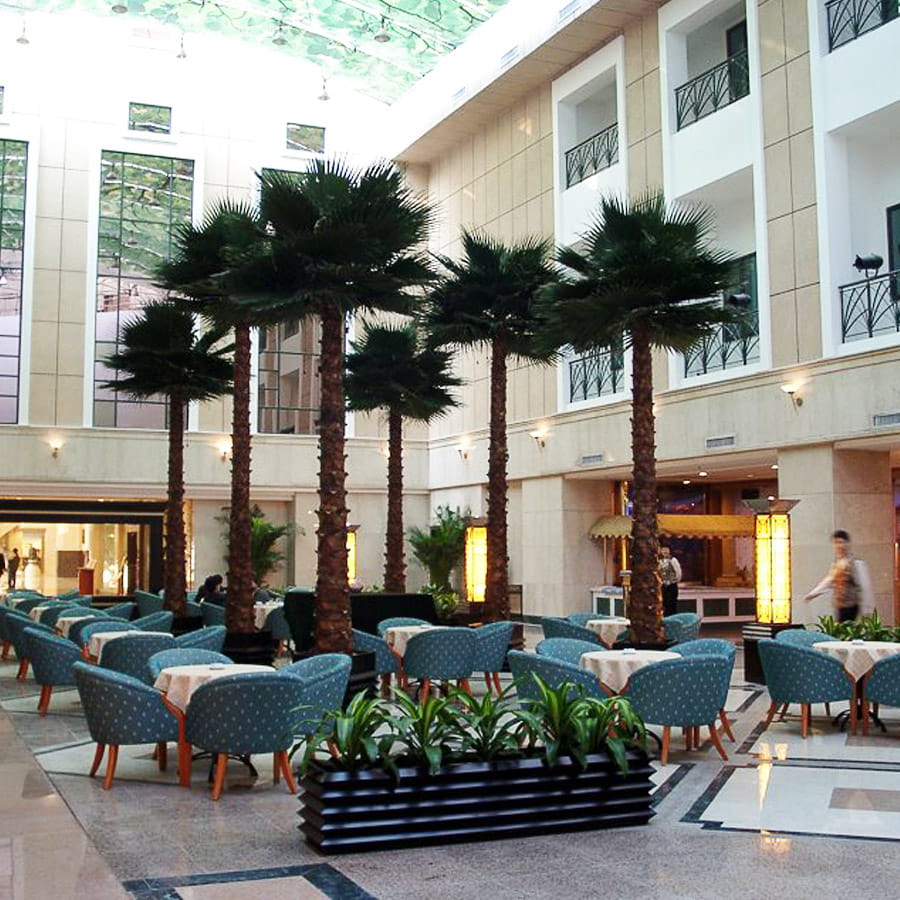
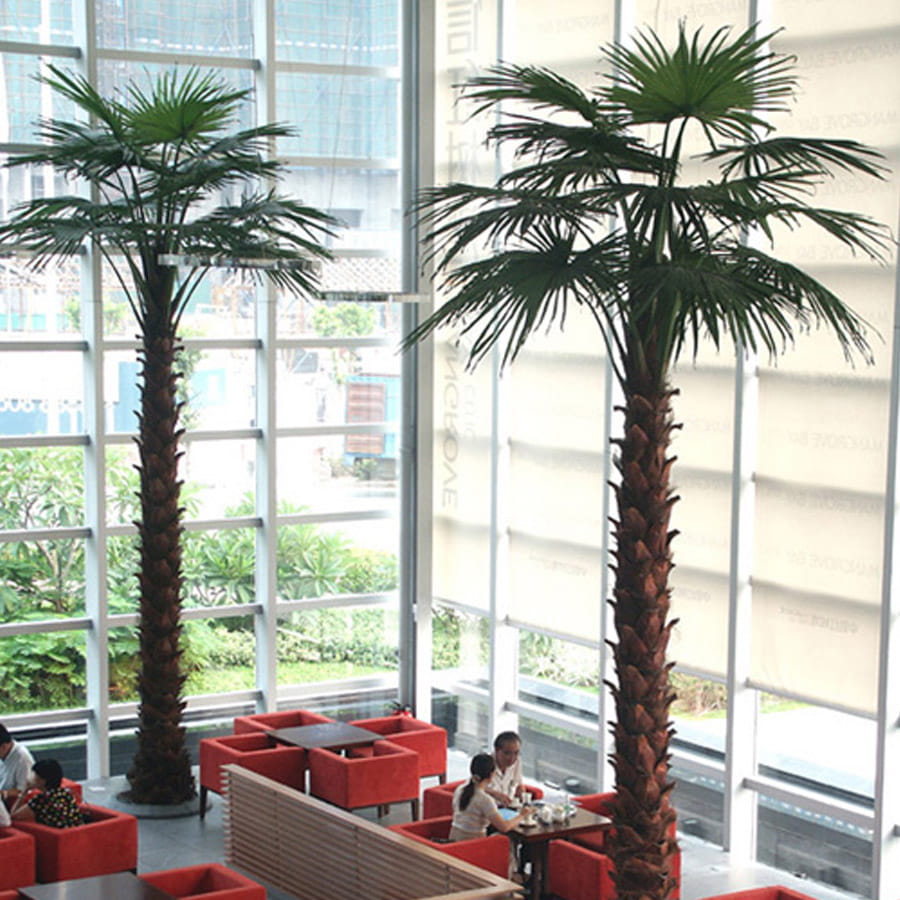
3. How to Match Artificial Palm Tree Height to Ceiling Height
Ceiling height is one of the most useful measurements when choosing an artificial palm tree. It provides a clear starting point for determining whether a product will look balanced and fit comfortably into the space.
There is no single height ratio that works for every interior. The best choice depends on the canopy shape, furniture arrangement, architectural features, and visual effect you want to achieve.
Low Ceilings: Approximately 2.2–2.5 m
Rooms with lower ceilings usually benefit from compact or medium-height palms. A tree that reaches too close to the ceiling can make the room feel crowded, particularly if its leaves spread widely.
For these spaces, consider:
- Measuring the actual ceiling height rather than relying on building plans.
- Leaving sufficient clearance above the highest leaves.
- Choosing a canopy that does not interfere with ceiling lights or wall-mounted fixtures.
- Checking whether the planter adds to the stated overall height.
A palm around 120–180 cm may be a reasonable starting point for many rooms in this range, although the appropriate size depends on the specific product and layout.
Standard Ceilings: Approximately 2.5–3 m
Standard residential and office ceilings allow a broader selection of artificial palm trees.
Products around 150–220 cm may work in many settings, depending on whether the tree is placed beside furniture, in an open corner, or near an entrance.
A taller tree may create a stronger focal point, while a shorter one can complement the room without drawing too much attention.
Before choosing, compare the product's total height with the ceiling clearance and the height of nearby furniture. A tree positioned beside a tall cabinet may require a different proportion from one placed in an empty corner.
High Ceilings: Approximately 3–4 m
Higher ceilings provide more flexibility for taller artificial palm trees. Trees around 200–300 cm may suit hotel lounges, open offices, large living rooms, and retail environments.
However, ceiling height alone should not determine the final selection. A 300 cm palm may still look disproportionate in a narrow room, while a shorter palm with a broad canopy may be appropriate in a wide reception area.
Consider the relationship between tree height, room width, viewing distance, and surrounding architectural elements.
Very High Ceilings: Above 4 m
Spaces with ceilings above 4 m may accommodate large or customized artificial palm trees, depending on the intended design.
For example, a tall palm can help establish a focal point in an atrium or a large hotel entrance. Multiple trees of varying heights can also create a more natural-looking arrangement.
For these projects, buyers should confirm the actual tree dimensions and canopy spread with the manufacturer. A layout drawing or scaled product rendering can help the project team assess the proposed sizes before production.
4. Consider Canopy Width, Not Just Tree Height
One common mistake when selecting an artificial palm tree is focusing entirely on its height. The canopy width is equally important because it determines how much horizontal space the tree occupies.
Two palms with the same overall height can look very different. One may have a narrow, upright shape, while another may have long, spreading fronds that extend into nearby walkways or seating areas.
Measure the Full Canopy Spread
Before choosing a product, check the maximum canopy width rather than measuring only the trunk.
This is especially important for artificial palm trees with long fronds. Their leaves may extend beyond the planter and affect the amount of usable space around the tree.
For example, a 200 cm palm with a wide canopy may be less suitable for a narrow corridor than a slightly taller product with a more compact shape.
Match Canopy Shape to the Intended Location
Different palm styles create different visual effects.
- Upright, narrow canopies:Often suitable for tighter spaces and areas where circulation must remain clear.
- Broad, spreading canopies:Can help fill open corners and larger decorative areas.
- Full, layered canopies: May work well in lobbies, lounges, and display environments where the tree is intended to attract attention.
These are general design considerations rather than fixed rules. The actual canopy shape depends on the specific palm variety and product construction.
For commercial projects, ask the supplier for the overall height, maximum canopy width, planter dimensions, and product photographs from multiple angles.
5. Choosing the Right Artificial Palm Tree Height for Different Spaces
The best height depends on how the space is used, how far away people will view the tree, and whether the palm serves as a decorative accent or a focal point.
Living Rooms and Residential Interiors
In a living room, an artificial palm tree often sits beside a sofa, near a window, or in an unused corner.
A medium-height product can provide a noticeable decorative element without dominating the furniture arrangement. In a spacious living room with high ceilings, a taller palm may be more appropriate.
Consider the following factors:
- The height of the sofa, cabinets, and nearby furniture
- The distance between the tree and the main seating area
- The amount of natural and artificial light
- The available floor space around the canopy
If the room already contains several large decorative elements, a more compact palm may maintain a balanced appearance.
Hotels and Resorts
Hotels use artificial palm trees in guest rooms, reception areas, lounges, restaurants, and other shared spaces.
Guest rooms generally have different space requirements from large lobbies. Medium-height trees may suit individual rooms, while taller products can help fill the vertical space in larger public areas.
For hospitality projects, consistency is also important. When multiple trees are placed along a corridor or across several rooms, the selected height and canopy shape should work with the overall interior design.
In resort settings, outdoor or poolside applications require additional attention to UV resistance, material suitability, wind exposure, and maintenance requirements. Not every artificial palm tree is designed for outdoor use.
Offices and Reception Areas
Artificial palm trees can be used in reception corners, lounge areas, meeting spaces, and open-plan offices.
For smaller reception areas, a medium-height palm may provide enough visual interest without obstructing signage or reception counters. In a large office entrance, taller trees may be more suitable.
Ensure that the canopy does not block directional signs, emergency equipment, lighting, or clear routes through the building.
Retail Stores and Shopping Centers
Retail environments often use artificial palm trees to complement displays, define zones, or add greenery to open areas.
The correct height depends on the store layout. A compact palm may work near a product display, while a tall palm may be suitable for a spacious entrance or central display area.
Retail buyers ordering multiple units should also consider consistency between products. Confirming the dimensions and appearance of a sample before placing a large order can help reduce differences between the approved design and the delivered products.
Restaurants and Cafés
Restaurants may use artificial palm trees near entrances, in lounge corners, or as part of a decorative layout.
In smaller dining areas, canopy width is particularly important because spreading fronds can interfere with chairs, tables, and customer movement.
For larger restaurants, taller palms may be suitable for open corners or high-ceiling areas. The selected product should complement the seating arrangement without creating unnecessary obstructions.
6. What Else Should You Check Before Buying an Artificial Palm Tree?
Once you have identified a suitable height range, review the product specifications and installation requirements before making a final decision.
Confirm the Total Product Height
Ask whether the stated height includes the planter or refers only to the tree itself.
If the product is supplied with a separate decorative planter, the finished installation may be taller than the tree's listed dimensions. The measurement method should be clear before comparing products from different suppliers.
Check the Materials and Intended Use
Artificial palm trees may use different materials for leaves, trunks, and internal structures.
The appearance, flexibility, durability, and suitability for different environments depend on the materials and construction used. For outdoor applications, check whether the product is specifically designed and tested for the expected exposure conditions.
If a project requires fire-retardant materials, confirm the relevant product specifications, applicable test standards, and supporting documentation rather than relying on a general product description.
Review Assembly and Packaging Requirements
Larger artificial palm trees may be shipped with detachable branches or trunk sections. This can help reduce shipping volume, but buyers should understand how the product is assembled and what tools or support may be required.
For imported products, confirm the packed dimensions, carton quantity, assembly instructions, and whether the final product can pass through doors, elevators, and other access points.
Request Product Photos and Dimensions
Product images help buyers evaluate appearance, but measurements are essential for space planning.
Before ordering, request:
- Overall assembled height
- Maximum canopy width
- Trunk dimensions and construction details
- Planter dimensions, if included
- Available size options
- Packing dimensions and assembly details
For customized artificial palm trees, a drawing or dimensioned product specification can help confirm the design before production begins.
7. How to Select Artificial Palm Tree Heights for Bulk Orders
For wholesalers, retailers, and commercial project buyers, choosing artificial palm tree heights involves more than selecting individual products. It may also require planning a coordinated product range.
Offer Several Height Options
Retailers may benefit from carrying different sizes of the same general palm style, provided the supplier offers suitable variations.
Shorter products can serve compact interiors, while medium and tall options can address customers looking for more substantial decorative plants.
The appropriate range depends on the retailer's customer base, available display space, price positioning, and storage capacity.
Standardize Specifications for Projects
For hotels, offices, and other multi-location projects, confirm whether the same product dimensions and design will be supplied across the order.
A clear product specification should identify the height, canopy width, trunk style, planter requirements, and any custom features.
If multiple heights are used within one project, mark their positions on the layout drawing. This makes it easier to review the arrangement and coordinate the required quantities.
Confirm Customization Possibilities
Some projects require dimensions that are not available in standard product ranges. Depending on the product design and manufacturer's capabilities, customization may involve overall height, canopy proportions, trunk appearance, or planter specifications.
When requesting a quotation, provide the desired height, available installation space, reference images, required quantity, and intended use. These details help the manufacturer assess feasibility and recommend an appropriate specification.
8. A Simple Checklist for Choosing the Right Height
Before placing an order, review the following points.
- [1] Measure the ceiling height and available floor space.
- [2] Determine the intended position of the artificial palm tree.
- [3] Check the maximum canopy width.
- [4] Compare the tree's proportions with nearby furniture and architectural features.
- [5] Confirm whether the stated height includes the planter.
- [6] Check clearance from lights, signs, doors, and walkways.
- [7] Confirm whether the product is suitable for indoor or outdoor use.
- [8] Review assembly, packaging, and installation requirements.
- [9] Request product drawings or additional photos when needed.
- [10] Confirm the dimensions and specifications before ordering in bulk.
Following this checklist can help buyers compare products more accurately and reduce the likelihood of choosing a tree that does not fit the intended space.
9. Frequently Asked Questions
What Is the Best Height for an Artificial Palm Tree Indoors?
There is no single best height for every indoor space. Trees around 120–200 cm may suit many residential interiors, offices, and smaller commercial areas. Larger rooms and high-ceiling environments may accommodate taller products. The final choice should consider ceiling clearance, canopy width, furniture, and placement.
How Tall Should an Artificial Palm Tree Be for a Hotel Lobby?
The appropriate height depends on the lobby's dimensions and design. Medium-height palms may suit compact reception areas, while trees around 200–300 cm or taller may work in larger spaces. Measure the installation area and review the canopy spread before confirming the product.
Can I Put a Tall Artificial Palm Tree in a Small Room?
Yes, provided its dimensions and placement are suitable. A tall palm with a narrow canopy may fit better than a shorter product with widely spreading leaves. Check the ceiling clearance, floor space, and relationship with nearby furniture before selecting the tree.
Should I Choose Height or Canopy Width First?
Both measurements matter. Start with the available ceiling height to establish a practical upper limit, then review canopy width to determine whether the tree fits the floor plan. For narrow areas, canopy width may be the more restrictive measurement.
Are Artificial Palm Trees Available in Custom Heights?
Some manufacturers offer customized artificial palm trees, depending on the product design and production requirements. Buyers should provide the desired height, canopy dimensions, reference images, quantity, and intended application to determine whether customization is feasible.
What Height Is Suitable for Outdoor Artificial Palm Trees?
The height depends on the surrounding space, installation conditions, and product design. In addition to dimensions, check UV resistance, material suitability, wind exposure, and the manufacturer's guidance for outdoor use. A product intended for indoor decoration should not automatically be assumed suitable for outdoor installation.
How Can I Make Sure an Artificial Palm Tree Fits Before Ordering?
Measure the installation area, request the assembled product height and maximum canopy width, and confirm whether the planter is included in the measurement. For larger projects, a dimensioned drawing or a scaled layout can help verify the proposed size before production and shipment.